Featured Artisans in Florence
A selection of the bespoke tailors, shirtmakers and shoemakers currently listed on SartorMap for Florence.
Il Bisonte
Natural vegetable-tanned leather goods
Est. 1970
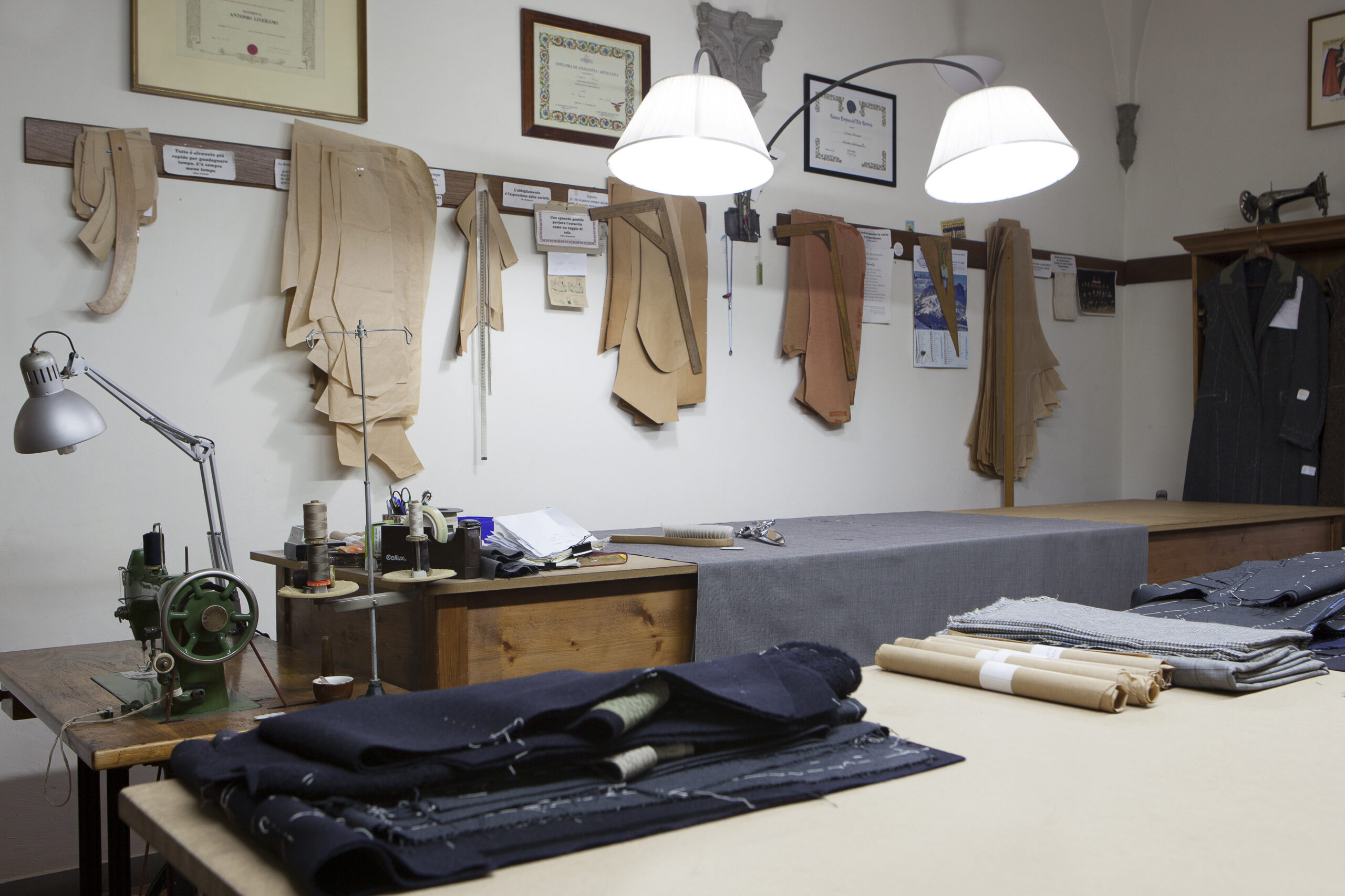
Liverano & Liverano
Florentine bespoke tailoring
Est. 1949
Mannina
Handmade shoes, traditional Florentine craft
Est. 1953
Peroni Firenze
Handmade leather bags and accessories
Est. 1956
Roberto Ugolini
Bespoke shoes, artistic patina
Est. 1996
Sartoria Vestrucci
Florentine bespoke, classic Italian cut
Est. 1955
Sciamat
Bold, creative tailoring
Est. 2006
Scuola del Cuoio
Artisan leather goods, gold-tooled leather
Est. 1950
What to Expect
Pricing
Florentine bespoke tailoring typically starts at €2,500–€4,000 for a two-piece suit. Artisanal shoemakers — a Florentine speciality — run from €1,800 to €4,500 for fully bespoke shoes. Bespoke shirts begin at €200–€320. The value relative to Paris or the historic London houses is considerable, and the quality is not a step down.
Timeline
3–5 months for tailored garments is standard. Florentine shoemakers often run longer — allow 5–8 months for a first pair of bespoke shoes, which require a last to be made from scratch. Returning clients with an existing last can sometimes receive new pairs in 3–4 months.
Appointments
Essential for all serious makers. Many Florentine artisans work in small studios, often without a formal shopfront. Email or telephone are the expected contact methods; some ateliers in the Oltrarno have limited walk-in hours. If you are travelling from abroad, booking appointments weeks in advance is advisable.
What to Bring
For tailoring, your usual shirts and shoes. For shoemaking, wear the socks you intend to use and be prepared to have your feet measured standing, sitting, and walking — Florentine shoemakers are thorough about foot mechanics. Visual references for both tailoring and shoes are welcome and speed the consultation considerably.
Getting Around
Oltrarno, south of the Arno
The Oltrarno district, south of the Arno, is the centre of Florentine craft. The area around Via Maggio, Borgo San Jacopo and the streets behind the Pitti Palace contains the greatest concentration of bespoke artisans. From Santa Maria Novella station, the Oltrarno is a 20-minute walk across the Ponte Vecchio or Ponte Santa Trinita. Taxis and buses serve the area; most ateliers are within walking distance of each other once you cross the river.
Browse All Florence Tailors on SartorMap
Explore the full directory of bespoke tailors, shirtmakers and shoemakers listed in Florence.
Browse Florence Tailors →